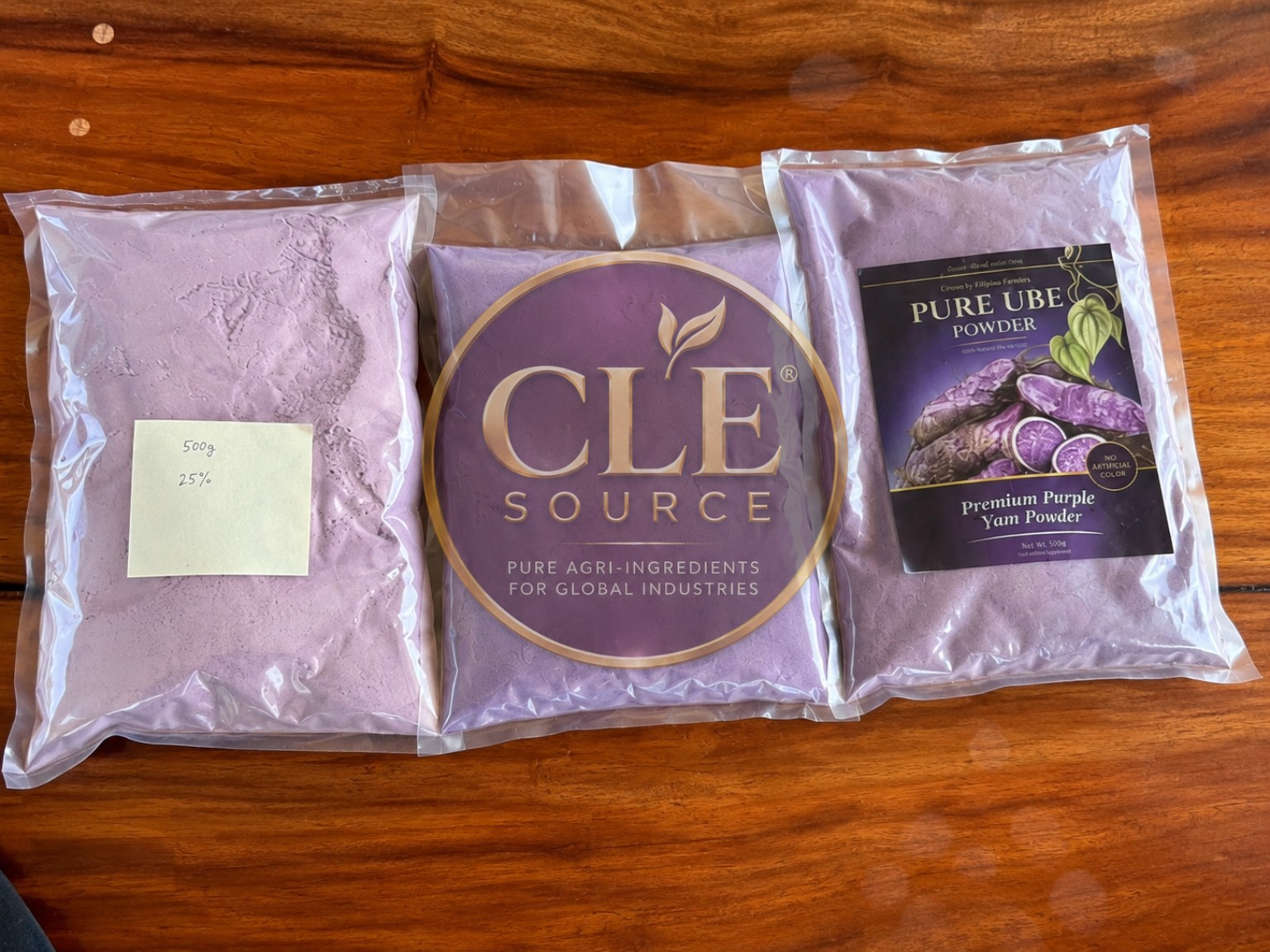
Ube is purple yam (Dioscorea alata), not purple sweet potato or taro. For Indian bakeries, beverage brands, dessert makers and wholesale distributors, the distinction matters: a product's identity, composition and performance are more important than a dramatic colour.
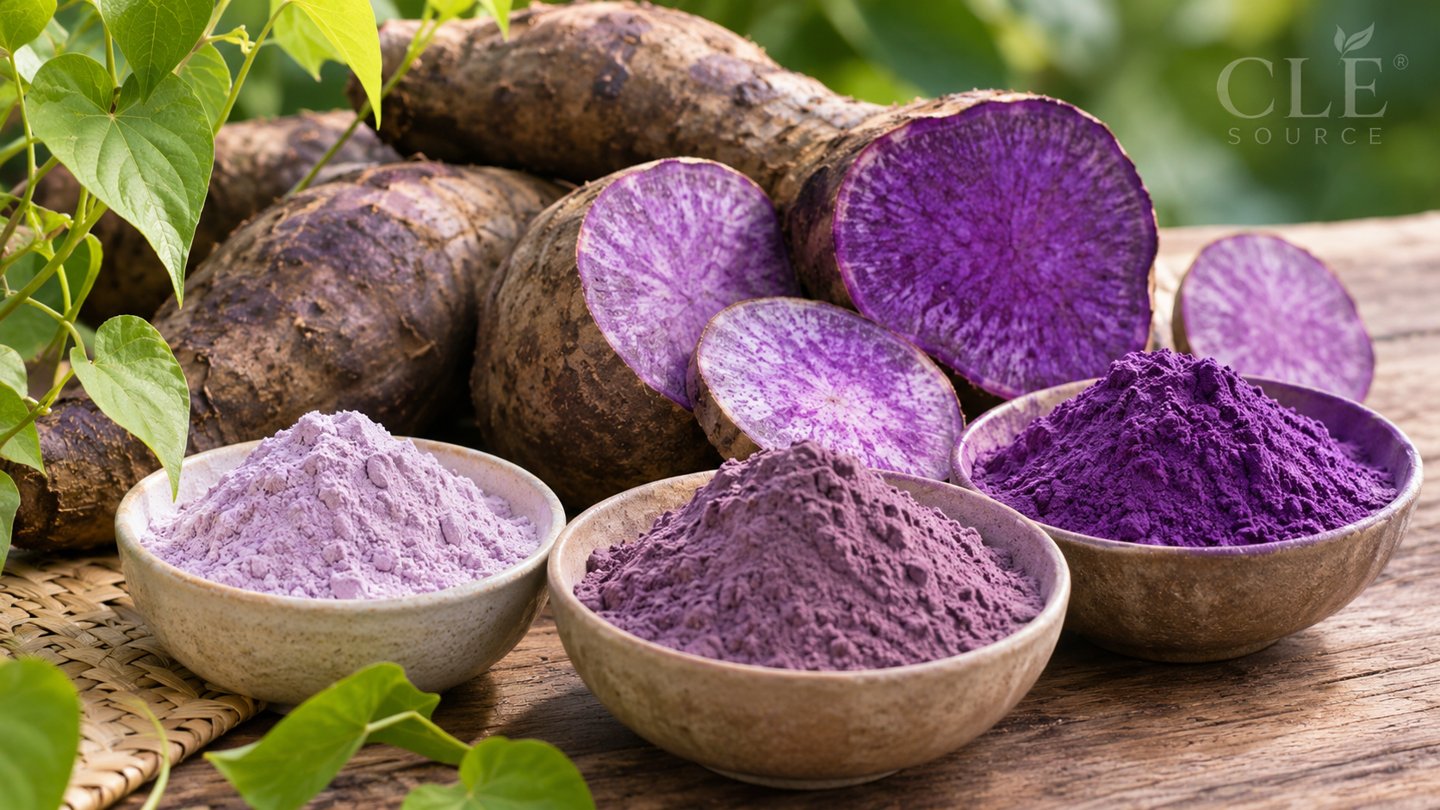
Why colour is not a purity test
Natural ube can show a range of purple shades. Variety, maturity and processing can affect the final appearance, and drying may alter the colour of the powder. A vivid shade is not automatically evidence of artificial colouring; a pale shade is not proof of purity either.
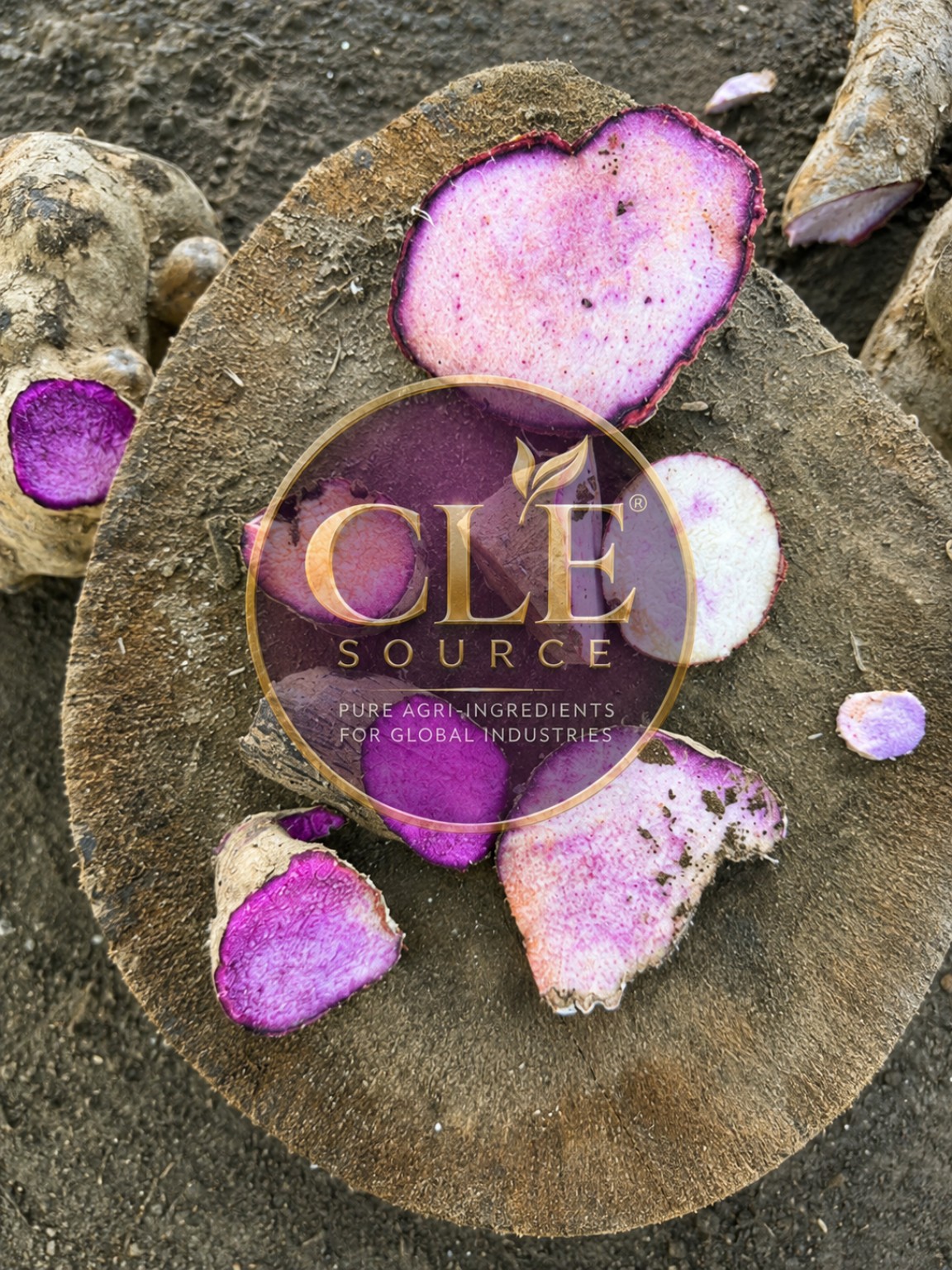
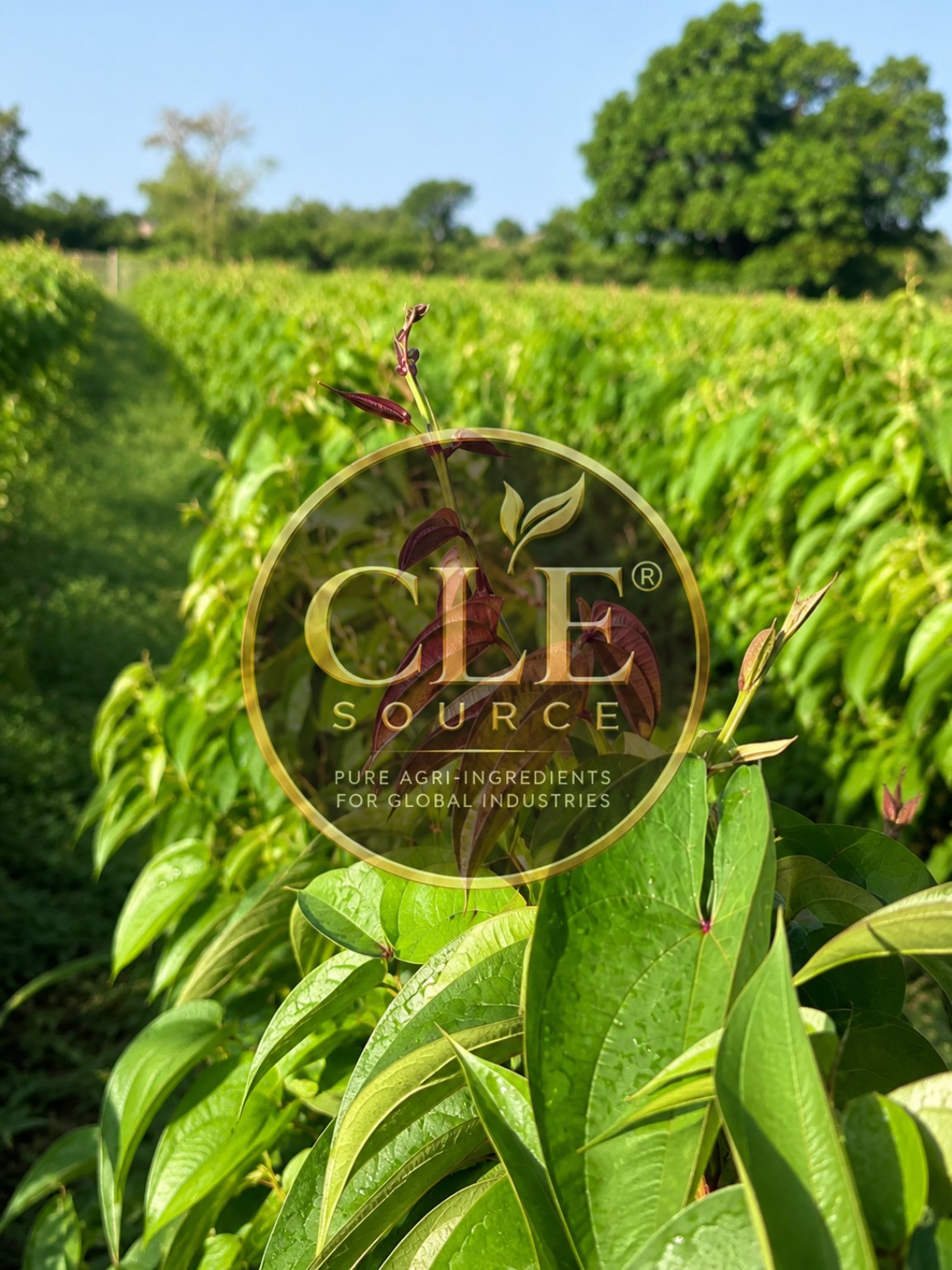
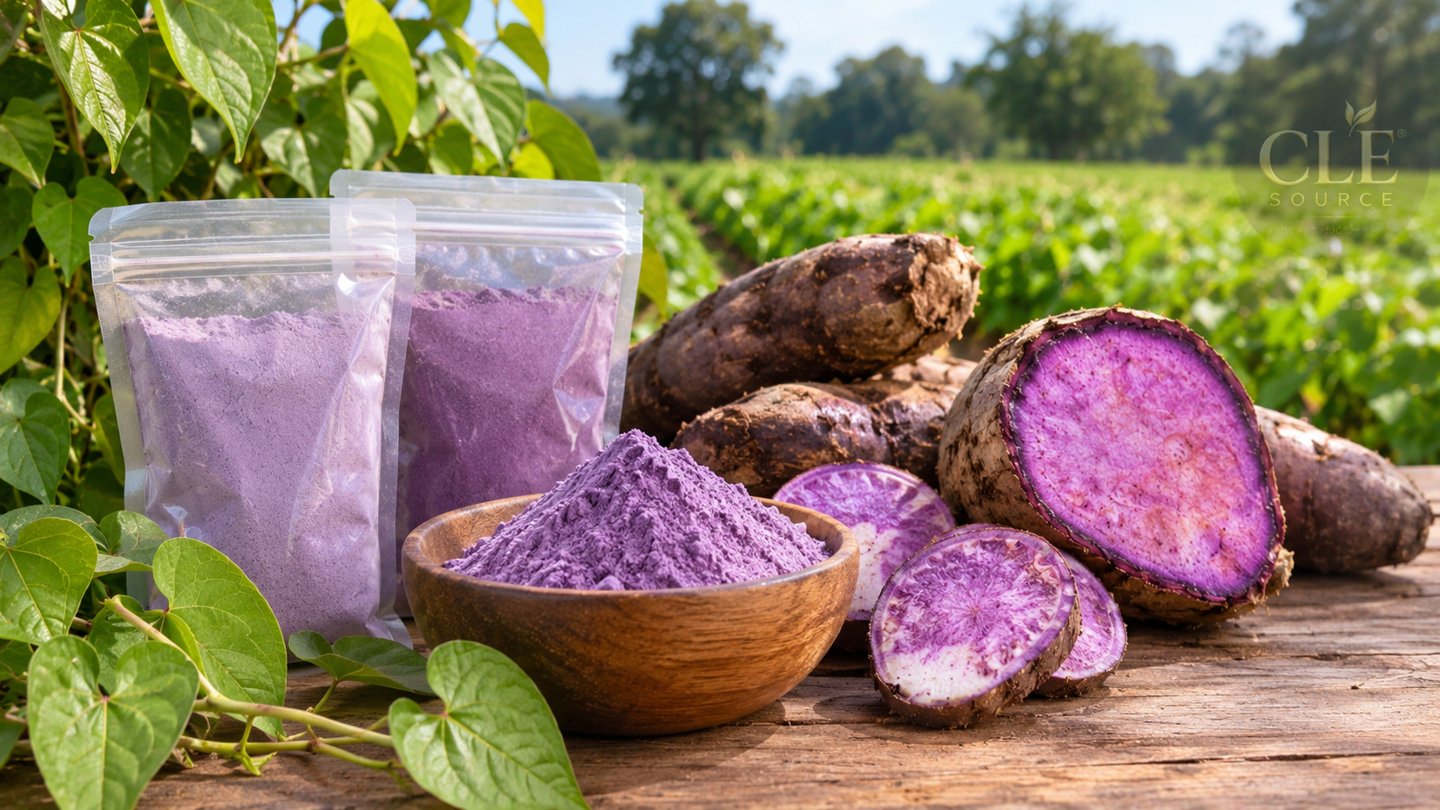
Fresh ube, powder and paste
Fresh ube is used in desserts, preserves and processed foods. Powder is a convenient ingredient for bakery, ice cream, beverages and confectionery formulations, while paste and purée suit fillings, desserts and other prepared foods. The ingredient form, moisture, particle size and formulation should match the intended application.
What procurement teams should request
- Botanical identity and a complete ingredient list, including carriers, added colours or flavourings, if any.
- Country of origin and supplier traceability for the specific lot.
- Product specification and a batch-specific certificate of analysis, including relevant food-safety parameters.
- A representative sample for colour, flavour and performance testing in your actual formulation.
- Written confirmation of packing, minimum order quantity, shelf life, price and delivery terms.
CLÉ Source: from sourcing to specification
CLÉ welcomes enquiries for purple yam powder, paste and fresh ube. Share your intended application, required grade, volume and destination so that sourcing options and supporting documents can be reviewed.